"In a world of geopolitical rivalry, the deaths of Egyptian scientists are no coincidence — they are orchestrated."
⚠️ A list of Egyptian scientists who were violently assassinated abroad.
Dr. Ali Moustafa Mosharafa (1950)
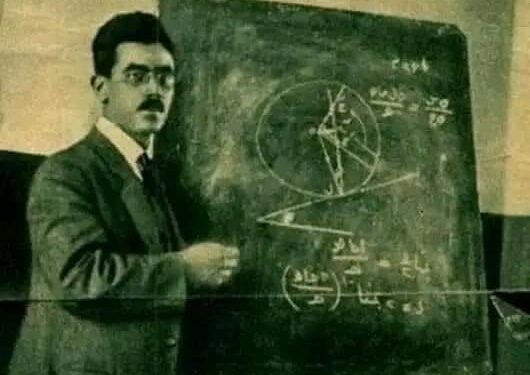
Dr. Ali Moustafa Mosharafa, was a pioneering Egyptian physicist deeply versed in atomic theory and quantum mechanics. His studies in Europe exposed him to cutting-edge developments in atomic and nuclear physics, particularly the theories of quantum mechanics and relativity. Mosharafa worked to introduce and develop these advanced concepts in Egypt, emphasizing the peaceful applications of atomic energy, especially in medicine and industry. He believed atomic knowledge was key to scientific progress and national development and was committed to educating future generations in these fields. His advocacy for the ethical use of atomic energy distinguished him as a visionary in the early days of nuclear science in the Egyptian world. Dr. Ali Moustafa Mosharafa's death remains suspicious, given his relatively young age of 51 and his excellent health and wellness at the time. He was a high-profile scientist, internationally respected, and widely recognized for his pioneering work in atomic science. Politically, he held strong anti-colonial and pro-republican views, and he notably refused to align himself with King Farouk, even declining royal appointments. In the tense climate of post-colonial Egypt—marked by rising nationalist movements—it is believed that early Zionist elements, in collaboration with British intelligence and king Farouk's, have played a role in his death, carefully orchestrating it without leaving any traceable evidence behind, at a time when Egypt was vulnerable to infiltration and exploitation under the colonial regime. Farouk's representatives at the time played a role in killing the Egyptian scientist. This occurred after “Musharafa” formed a group called “Egyptian Youth,” which included a large number of intellectuals, scientists, and students. The group's aim was to declare Egypt an independent Republic. Although news of this secret group became public, the king remained in power and denied any wrongdoing. This was especially significant because he had granted the scientist the rank of Pasha (باشا).
Awards and honors:
- Title of Pasha : Awarded by King Farouk of Egypt in recognition of his scientific achievements and service to Egyptian education.
- Honorary Memberships:He was a member of several scientific societies in Egypt and abroad, reflecting his standing in the international scientific community.
- Academic Honors: Held prestigious academic positions, including Dean of the Faculty of Science at Cairo University, which was a high honor in itself. In 1924, he was awarded the Doctor of Science (D.Sc.) degree from the University of London, becoming the first Egyptian and only the 11th scientist worldwide to receive that prestigious degree. In 1947, he was invited by the Institute for Advanced Study at Princeton to join as a visiting professor, an honor he ultimately declined due to royal restrictions. He is one of the namesakes of the Newton-Mosharafa Fund, a British-Egyptian science partnership honoring both Sir Isaac Newton and Dr. Mosharafa
- Legacy Honors: Several Egyptian institutions and awards have been named after him posthumously to honor his legacy, including scholarships and science awards.
Dr. Samira Moussa (1952)

Dr. Samira Moussa, a pioneering Egyptian nuclear physicist and the first Egyptian woman to earn a Ph.D. in nuclear physics, is believed to have been the target of a calculated assassination. She had reportedly received a fraudulent invitation to visit a nuclear research facility in the United States—an institution that did not exist. While traveling along a coastal road in California, her vehicle is said to have swerved and plunged approximately 40 feet off a cliff. The crash resulted in her immediate death, while the driver, who was allegedly using a false identity, escaped uninjured and subsequently disappeared without a trace. Numerous accounts and reports have alleged that the Zionist intelligence agency, Mossad, was involved in orchestrating the assassination. These claims further suggest that Mossad was aided by the Jewish-Egyptian actress Raqya Ibrahim, who allegedly exploited her close personal relationship with Dr. Moussa to assist in planning and executing the operation. "Moussa quote [I'll make nuclear treatment as available and cheap as aspirin.]"
Awards and honors
- 1953, when she was honored by the Egyptian Army.
- 1981, when she was awarded the Order of Science and Arts, First Class, by then-President Anwar Sadat.
- A laboratory at the Faculty of Science and a school in her village were named after her.
- The Egyptian TV transmitted a serial titled The Immortal dramatizing her biography.
- In 1998, while celebrating the Egyptian Woman Day, it was decided to establish a cultural solace[clarification needed] in her birthplace bearing her name.
- In 2000, a book was published covering her life and scientific contributions.
Dr. Samir Naguib (1967)
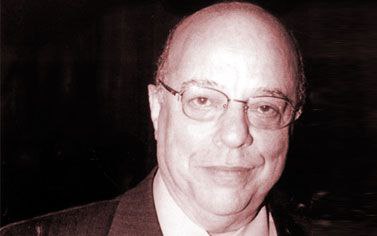
Dr. Samir Naguib, an Egyptian nuclear scientist, is considered one of the pioneers of the young generation of Egypt nuclear scientists. He graduated from the Faculty of Science at Cairo University at an early age and pursued scientific research in the field of atomic energy. Due to his distinguished scientific competence, he was nominated for a mission to the United States, where he worked under the supervision of prominent professors of nuclear physics. At just thirty-three years old, he demonstrated exceptional brilliance and remarkable genius. During his time in America in the mid-1960s, he completed his doctoral dissertation a full year ahead of schedule. The conspiracy is believed to have begun when Dr. Samir announced his intention to return to Egypt. Many American entities approached him, urging him not to leave. He was offered numerous scientific and financial incentives to remain in the United States. However, Dr. Samir Naguib firmly rejected all these offers. On the night scheduled for his return to Egypt, forces hostile to Egyptian world are believed to have intervened—forces that had long vowed to undermine any form of advanced Egypt scientific progress, regardless of motives or consequences. In Detroit, as Dr. Samir was driving with great hopes of returning home to share his research and reunite with his family, he was suddenly confronted by a massive transport vehicle. Initially, he assumed it was just another driver on the road and attempted to move aside. However, the vehicle began tailing him aggressively. In a tragic moment, the truck accelerated and deliberately rammed into his car. The vehicle was completely destroyed, and Dr. Samir was killed instantly. The truck and its driver vanished. The incident was officially recorded as a hit-and-run by an unknown assailant. It is widely believed—and has been confirmed by Egyptian authorities and the public—that Zionist elements and their allies were heavily involved in the assassination of Egyptian scientists who lived or traveled abroad.
achievements:
- He was part of Egypt's emerging generation of nuclear scientists, having graduated from Cairo University's Faculty of Science at a young age.
- In the mid-1960s, Naguib earned a position as an assistant professor in Detroit, notably winning a competitive selection from over 200 candidates—a testament to his skill and promise
- He conducted advanced nuclear physics research, reportedly attracting attention both for his scientific promise and patriotic intent: he planned to return to Egypt to help launch its nuclear program, especially in the aftermath of the 1967 Arab-Zionists war
Dr. Yahya al-Mashad (1980)
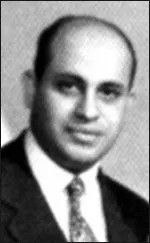
Dr. Yahya El Mashad born in Benha, Egypt (1932), was a distinguished Egyptian nuclear physicist whose academic and scientific career marked him as one of the most prominent Egyptian scientists of his time. After earning his degree in electrical engineering from Alexandria University in 1952, he pursued Doctoral Studies Initially went to London in 1956, but due to the Suez Crisis, moved to Moscow, Soviet Union and completed a Ph.D. in nuclear reactor engineering after six years, where he completed his Ph.D. with distinction. Upon returning to Egypt in the 1960s, he served as a professor and senior researcher at the Egyptian Atomic Energy Authority, contributing to the country's early nuclear ambitions. Following the suspension of Egypt's nuclear program, El Mashad was invited to join Iraq's atomic energy project, where he quickly rose to head its nuclear program. In this role, he played a central part in coordinating Iraq's nuclear collaboration with France, including overseeing technical aspects of reactor construction and uranium enrichment logistics. His expertise, leadership, and dedication placed him at the heart of Egyptian and Arab nuclear development during a critical and highly sensitive geopolitical era. On the night of June 13-14, 1980, Dr. Yahya El Mashad was found brutally murdered in Room 941 of Le Méridien Étoile in Paris. The scene was horrific: his skull had been crushed, his throat slit, and his body bore multiple stab and bludgeon wounds. The hotel room was ransacked and smeared with blood, indicating a violent struggle. Days later, a French woman—who have witnessed the attack—was discovered dead, struck by a hit-and-run driver who fled the scene. French authorities suspected the involvement of Israeli intelligence (Mossad), citing the highly professional nature of the killing. According to intelligence analyst Ronen Bergman, Mossad operatives, lacking firearms at the time of the operation, improvised with a blunt object—possibly a copper rod—to carry out the assassination once they located their target. The attack bore the hallmarks of a targeted covert operation, though Mossad has never officially acknowledged responsibility.
achievements:
- After Egypt's nuclear program was halted post-1967, El Mashad moved to Iraq to lead its nuclear ambitions, directing cooperation with France on reactor design and uranium shipments
- Supervised the transfer and technical coordination of Iraqi nuclear reactor parts, including enriched uranium allocations for the Osirak reactor (also called Tammuz).
Dr. Abu-Bakr Ramadan (2024)
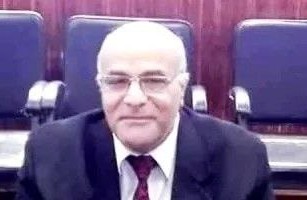
Dr. Abu-Bakr Ramadanwas a prominent Egyptian nuclear regulatory expert and esteemed academic renowned for his extensive contributions to nuclear safety and radiological monitoring. Serving as the head of Egypt's National Radiation Observatory Network within the Nuclear and Radiological Regulatory Authority, he played a pivotal role in overseeing the country's nuclear safety infrastructure and ensuring compliance with international standards. Throughout his career, Dr. Ramadan collaborated closely with the International Atomic Energy Agency (IAEA), providing expert technical advice on environmental and radiological assessments of nuclear facilities in sensitive geopolitical contexts, including Iran's Bushehr nuclear reactor and Israel's Dimona reactor. His expertise was further recognized when he participated in an Egyptian-IAEA mission in 2024 tasked with evaluating the environmental safety of Egypt's ambitious Dabaa nuclear power plant project, a cornerstone of the nation's energy diversification strategy. Beyond regulatory oversight, Dr. Ramadan's academic work and leadership in nuclear science significantly advanced Egypt's radiological safety protocols, strengthening the country's commitment to peaceful and secure nuclear technology development. On September 5-6, 2019, Dr. Abu Bakr Ramadan collapsed after drinking juice in his hotel room in Marrakech, Morocco, while attending an IAEA workshop. He was transported to a private clinic, where he was pronounced dead shortly thereafter. The official Moroccan autopsy cited the cause of death as an acute heart attack, a conclusion echoed by Egyptian authorities who attributed his death to natural causes. However, reports indicated that Dr. Ramadan had suffered from severe stomach cramps after consuming the juice, prompting blood tests to investigate possible poisoning. Despite the official findings, Egyptian lawmakers and observers raised concerns, noting that multiple Egyptian nuclear scientists had previously died under similarly mysterious circumstances. These suspicions fueled calls for a deeper investigation, particularly amid widespread belief in intelligence circles that Mossad—possibly in coordination with foreign agencies—had deliberately targeted Egyptian nuclear experts. The operation, if conducted, was suspected to follow what is often referred to in espionage as a "No-Evidence-Left-Behind-Assassination" (NELBA) regime, a method designed to leave no trace of foul play.
achievements:
- Led Egypt's radiation monitoring network, overseeing national nuclear safety protocols.
- Provided IAEA consultations on cross-border environmental assessments, notably in Bushehr (2015) and Dimona.
- Served on IAEA-Egypt mission in 2024 to evaluate environmental aspects of Egypt's Dabaa nuclear power project
- Recognized nationally for advancing Egypt's radiological oversight and nuclear regulatory infrastructure.
Dr. Reem Hamed (2024)
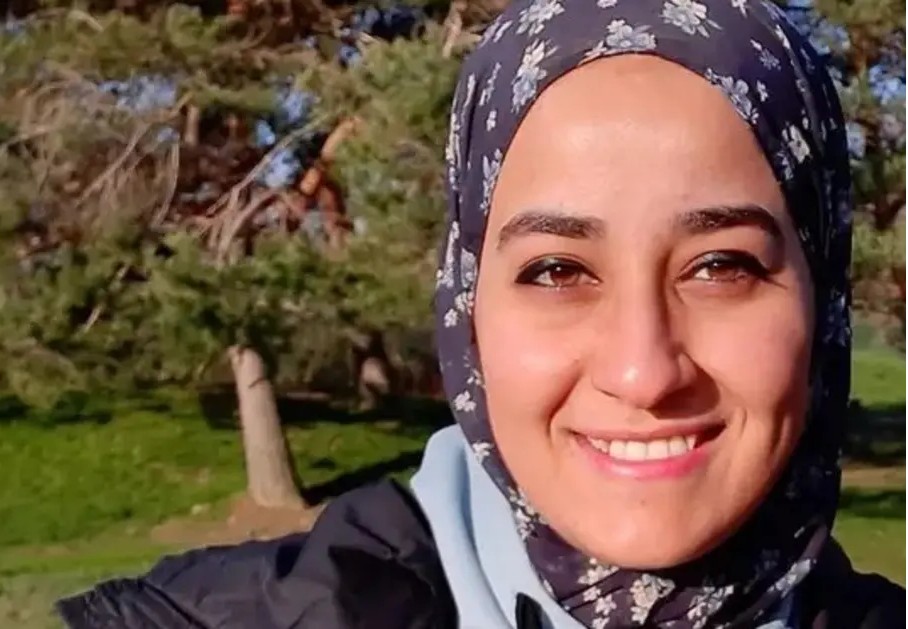
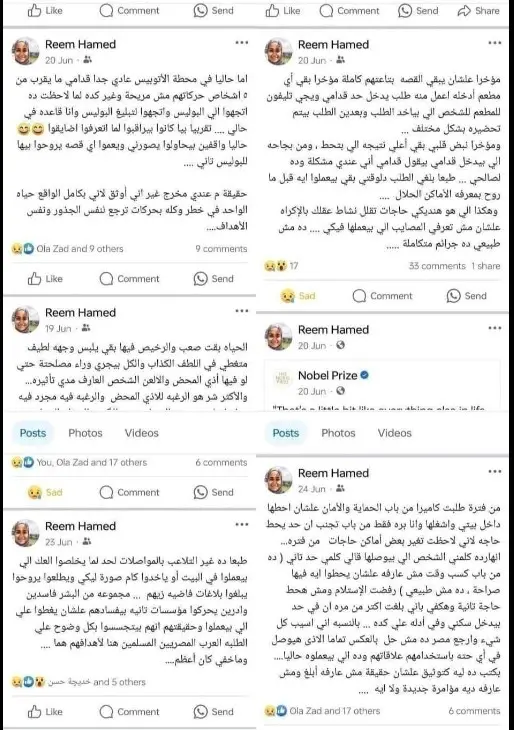
Dr. Reem Hamed was born in Cairo, Egypt, in 1995/1996. She earned her bachelor's degree in agriculture with a focus on biotechnology from Cairo University in 2017, followed by a diploma in bioinformatics from Ain Shams University. In September 2020, she received a prestigious scholarship to pursue a master's degree in genomics and epigenetics at the Institute of Integrative Biology of the Cell (I2BC) at Université Paris-Saclay. After completing her master's in 2022, she was awarded another scholarship to begin her PhD in genomics at the same institute under the supervision of Professor Carl Mann, a recognized expert in cellular senescence and cancer biology. Reem's doctoral research harnessed RNA sequencing to investigate inflammatory gene expression and genome stability in aging human fibroblasts—an innovative fusion of genomics, epigenetics, and bioinformatics aimed at uncovering the molecular mechanisms of cellular aging. In late August 2024 (reported between August 22-25), Reem Hamed was found dead outside her apartment in Les Ulis, a suburb near Paris. French authorities promptly launched an investigation, closely monitored by the Egyptian Consulate. In the days leading up to her death, Reem reportedly posted—and later deleted—several alarming messages on social media after receiving threats. She claimed she was under constant surveillance and alleged that her electronic devices had been hacked, gas was being sprayed under her apartment door, and her food had been tampered with. In the weeks prior, she had posted multiple times on accounts attributed to her on Facebook and X (formerly Twitter), describing incidents of stalking, electronic surveillance, the addition of harmful substances to her food (possibly affecting her heart), and unauthorized entry into her home. She hinted that she had been threatened with death if she did not remove these posts. Reem had also informed her family that, upon returning home on several occasions, she noticed objects out of place—such as rearranged food items in the refrigerator—making her fully aware that unknown individuals had the ability to enter her residence without her knowledge. Despite reporting these incidents to local police, her complaints appeared to have been disregarded, raising concerns of intentional neglect. According to later assessments by intelligence analysts and experts, her death is believed to have been the result of a deliberate and highly sophisticated operation carried out by advanced Zionist intelligence elements. These agencies, allegedly working in coordination with allied operatives, are suspected of systematically targeting elite Egyptian scientists and exceptional students—individuals with extraordinary academic promise—through intense physical and digital surveillance, ultimately with the objective of assassination.
achievements:
- Biotechnology Expertise: Bachelor's from Cairo University and advanced studies at Paris-Saclay.
- Academic Honors: Awarded scholarships including one from Erasmus Mundus, and first prize at the International Biodiversity Info program.
- Research Contribution: Her work explored whether heightened inflammatory gene expression is a recurrent phenotype in human fibroblasts, contributing to knowledge on cellular aging and immunity.
- International Recognition: Selected for a competitive PhD position in France, she was on track to become a leading voice in her field.